Column · @mymusiccompositionadsfocus
Why Music Composition for Ads Demands a Different Skill Set
I spent years writing songs in my bedroom, layering synth pads over drum loops in Ableton Live, dreaming of sync placements. When I finally landed my first brief for a national commercial, I learned fast that music composition for ads is not songwriting with a timer. It is a discipline that marries narrative instinct with ruthless precision. The client does not want your best hook; they want the right emotional cue at exactly 0:17, and they want it to feel inevitable.
That shift in thinking took me months to internalize. In Los Angeles, where every other producer seems to have a Logic Pro license and a microphone, the difference between a demo and a delivered spot often comes down to how well you understand brand identity. You are not making a hit. You are making a functional piece of audio that has to serve a product, a voiceover, and often a Foley track already locked in Final Cut Pro. The music must breathe around those constraints without sounding squeezed.
The Brief Is the Score
When a director or agency producer hands you a brief, they have usually spent weeks arguing over every frame. They know the pacing. They know the target demo. They might even have a temp track they have fallen in love with. Your job is to decode what they actually need, not what they ask for. A request for "something epic" might really mean "a single French horn with a slow attack." A request for "quirky" could mean "a pizzicato string line that never lands on the root."
I have sat in sessions where a mix engineer spent two hours tweaking the level of a single sub-bass note because it conflicted with the voiceover at 0:23. That level of granularity is normal. You do not get to hide behind reverb or a loud master. Every element is exposed, and every decision must serve the story the images are telling.

The Toolbox Is Wider Than You Think
Most people assume commercial music is written in Pro Tools because Pro Tools is the industry standard for tracking and mixing. And for final delivery, it often is. But the initial writing and sketching happens in all kinds of DAWs. I know composers who do their early work in Logic Pro, others who swear by Ableton Live for its clip-launching and warping capabilities. The DAW is a pencil. What matters is how fast you can iterate when the client sends notes at 11 p.m.
Some of the most effective music composition for ads I have heard was built around a single microphone recording of a Foley prop, a squeaky door, a rustling jacket, processed into a rhythmic bed. That kind of resourcefulness comes from knowing your sound design library and your synth patches inside out. It also comes from understanding that a synth pad that sounds beautiful in isolation might turn to mud once the voiceover and sound effects are layered in.
Royalty-Free Is Not the Enemy, But It Has Limits
There is a huge market for royalty-free music, and it serves a real purpose. Small brands, internal corporate videos, social media ads, they need something decent on a budget, and royalty-free tracks can fill that gap. But when a national brand or a premium streaming service needs a campaign that feels unique, they turn to custom composition. A royalty-free track cannot know that your voiceover talent took a breath at a specific moment, or that the edit changed three times during post.
Music licensing is a parallel world. It is possible to license an existing track from a library or an indie artist, and sometimes that is the right call. But licensing an existing piece means you inherit its structure, its key changes, its emotional arc. Custom work lets you design the arc to match the spot beat by beat. That is the difference between a track that sits under the dialogue and a track that actively lifts the scene.
What a Studio Really Brings
When I worked as an audio engineer in a Hollywood post facility, I learned how much of the process happens after the music is written. The mix engineer has to balance the music against the voiceover, the Foley, the sound design. A good mix engineer will ask you to carve out space in your arrangement: roll off the low mids where the voice sits, open the high end for the Foley, leave a hole for the spot's signature sound effect. If you have written a dense, wall-of-sound arrangement, you have left no room for anyone else.
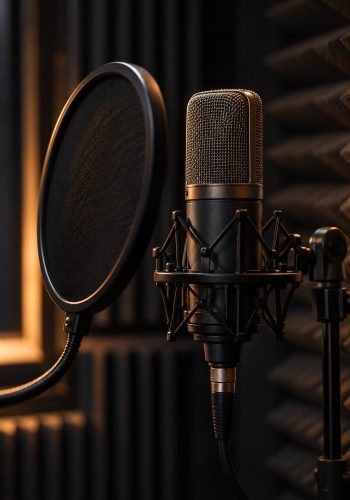
That is why studios like Spacewalk Sound exist. They are not just a room with a console. They are a team that understands how music composition for ads fits into the larger puzzle of post-production. The composer, the sound designer, the Foley artist, the mix engineer, they all have to collaborate so that the final 30 seconds feel like one coherent piece of storytelling.
Real Examples, Real Trade-Offs
I worked on a spot for a beverage brand where the director wanted a driving electronic beat that felt like summer. I built a sketch in Ableton Live with a bright synth pad and a punchy kick. The voiceover was recorded by an actor with a naturally warm, low voice. The first mix sounded fine in the studio, but when we played it on a car stereo, the voiceover got swallowed by the low end of the kick. We had to either rewrite the kick pattern or re-EQ the voice. We ended up changing the kick to a higher-pitched, snappier sample and adding a layer of Foley, a soda can opening, that became the rhythmic anchor of the whole spot. That solution came from the mix engineer, not the composer.
Another time, a client wanted a track that felt nostalgic but modern. They sent a reference with a prominent acoustic guitar. I recorded a guitar part with a single microphone, then processed it through a bit-crusher to give it a lo-fi texture. The brand identity was rooted in authenticity, so the slight grit of the processing actually sold the concept better than a clean recording would have. That is the kind of judgment call that comes from experience, not from a tutorial.
Streaming and the Changing Landscape
Platforms like Spotify have changed how audiences hear music, but they have also changed how brands think about audio. A brand might want a track that could plausibly exist in a playlist, because they want the listener to associate the brand with that vibe. That is a fine line to walk. You have to write something that feels like it could stand alone, but that also works as a functional underscore for a 15-second cutdown.
I have seen composers try to force a verse-chorus structure into a 30-second spot. It rarely works. The chorus lands too late, or the verse feels like waiting. A better approach is to build a loop with subtle variations, a filter sweep, a new percussion hit, a voice that enters and exits, that gives the editor enough material to work with across different lengths. You are not writing a song. You are writing a system.

The Human Element
At the end of the day, the most important tool in commercial music is your ear and your ability to collaborate. You can have the best synth pad patch in the world, but if you cannot take a note from a client without getting defensive, you will not last long. You have to be able to hear a critique about the mix and understand that it is not personal. The spot has to work. The brand identity has to stay intact. The voiceover has to be heard. The Foley has to pop.
I still remember the first time I heard a spot I wrote playing on network television. It was a 15-second bumper, maybe 40 notes total, but it was mine. And I knew that every one of those 40 notes had been chosen for a reason. That is the craft. That is what separates a track from a piece of music that actually does a job.